How the Hormuz Crisis is Quietly Reshaping Global LNG Trade & Energy Security (2026)
April 29, 2026 | GeoKeeps Global Energy Analysis
While the world’s attention remains fixed on Brent crude hovering above $110 per barrel and the restricted Strait of Hormuz, a deeper, more structural shift is taking place in the global LNG (Liquefied Natural Gas) market. The ongoing crisis is quietly forcing major energy players to rethink supply chains, infrastructure, contracts, and long-term energy security strategies.
This is not a short-term disruption. The Hormuz stalemate is acting as a catalyst for permanent changes in how the world trades, transports, and secures natural gas.

Image: Strait of Hormuz – the critical chokepoint for global LNG trade
The Current LNG Disruption
Before the 2026 crisis, nearly 20% of global LNG trade passed through the Strait of Hormuz, mainly from Qatar, the world’s second-largest LNG exporter. With shipping heavily restricted due to the US-Iran standoff, LNG tankers are now forced to take the much longer route around the Cape of Good Hope.
This rerouting adds 10–18 extra days per voyage, dramatically increasing costs, fuel consumption, and insurance premiums. Spot LNG prices in Asia and Europe have spiked as a result, creating supply uncertainty for importers.
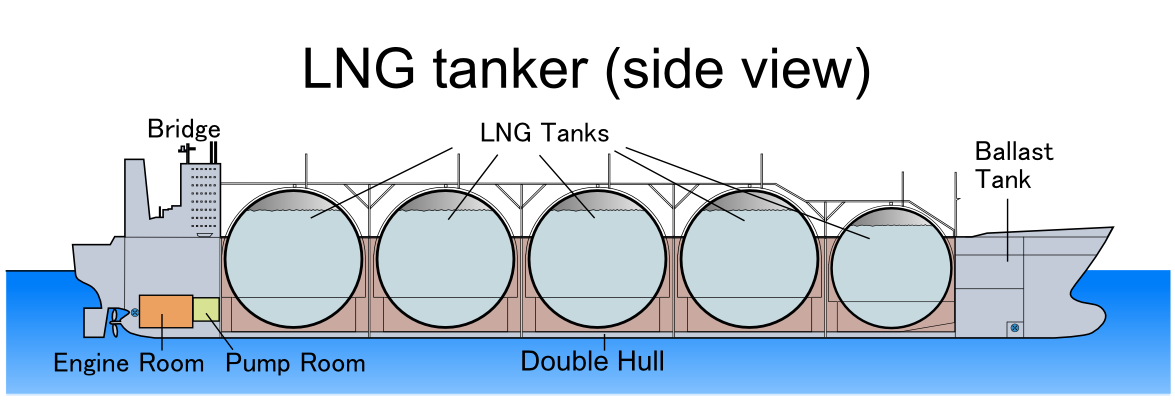
Image: Large LNG tanker vessel – now facing significantly longer routes due to the Hormuz crisis
Winners in the New LNG Landscape
1. United States
American LNG exporters are the biggest beneficiaries. US export terminals are operating at near full capacity. Buyers in Europe and Asia are signing long-term contracts at premium prices, preferring politically stable US supply over Middle Eastern sources.
2. Russia
Russia has increased both pipeline gas and LNG exports to Asia, filling part of the gap created by disrupted Qatari shipments.
3. Australia & Other Producers
Australian projects are gaining market share in Asia due to shorter shipping distances. New producers in East Africa are also seeing renewed interest.
4. Singapore
As a global trading and regasification hub, Singapore is profiting from higher ship traffic, storage demand, and trading opportunities.
Losers and Vulnerable Regions
Europe
Still recovering from the 2022 Russian gas crisis, Europe is facing renewed pressure. Higher spot prices and longer delivery times are pushing up electricity and heating costs across the continent.
Asia’s Major Importers
Japan, South Korea, China, and India — which dominate global LNG demand — are under significant strain. Japan and South Korea, with almost no domestic production, are particularly exposed. India is accelerating domestic exploration and renewable energy projects to reduce dependence.
Smaller Importers
Countries like Pakistan, Bangladesh, and several Southeast Asian nations are struggling due to limited alternatives and weaker bargaining power.

Image: Broader view of the Persian Gulf – the heart of global LNG exports
Long-Term Structural Changes
The crisis is driving several irreversible shifts:
- Infrastructure Investment Boom: New LNG terminals, FSRUs, and storage facilities are being fast-tracked worldwide.
- Contract Flexibility: Buyers are demanding shorter, more flexible contracts with destination clauses.
- Energy Diversification: Governments are accelerating renewables, nuclear power, and domestic production.
- Shipping Evolution: Demand for advanced, fuel-efficient LNG carriers is rising sharply.
- Geopolitical Realignment: New energy alliances are forming, particularly around US and Australian LNG.
Investment & Market Outlook (2026–2030)
The LNG sector now offers selective opportunities amid volatility. US and Australian LNG projects, shipping companies, and technology providers for regasification are attractive. At the same time, heavy reliance on Middle East supply is becoming riskier.
Overall, the world is moving toward a more diversified but costlier energy system. While short-term pain is real, the long-term benefit could be greater resilience against future chokepoint risks.
Conclusion
The 2026 Hormuz crisis may ultimately be remembered less for its impact on oil prices and more for how it forced the global energy industry to finally reduce dependence on a single vulnerable waterway.
The silent revolution in LNG trade is well underway. Its full consequences will continue unfolding over the coming years, reshaping not only energy markets but also international relations.
What’s your view?
Do you think the Hormuz crisis will permanently change global LNG trade patterns? Which countries or companies will benefit the most in the long run? Share your thoughts in the comments below 👇
Share this detailed analysis with anyone interested in global energy markets. Follow GeoKeeps for regular independent updates on Hormuz, LNG, oil prices, and geopolitical developments.
Stay informed. Stay ahead.
GeoKeeps | Independent Geopolitical & Energy Market Analysis
Comments
Post a Comment